Cart
0
You may also like








At some point in parenting, most of us pause mid-meal and think,
“They eat enough… but are they actually getting what they need?”
The plate may be empty. The food may look “healthy.” And yet, your child seems tired again. Falls sick often. Focus drifts. Appetite disappears for days and then returns without warning. Growth feels uneven, even though you are doing everything you can.
Sometimes the signs are not physical at all.
Big emotions that come out of nowhere.
Meltdowns over small things.
Anxiety around food, school, or sleep.
Low frustration tolerance.
A child who seems constantly “wired” or constantly exhausted.
This is usually the moment when parents sense, intuitively, that something deeper is at play.
Not calories.
Not quantity.
But micronutrients.
The nutrients that do not fill the stomach, but quietly run the body, the brain, and the nervous system.
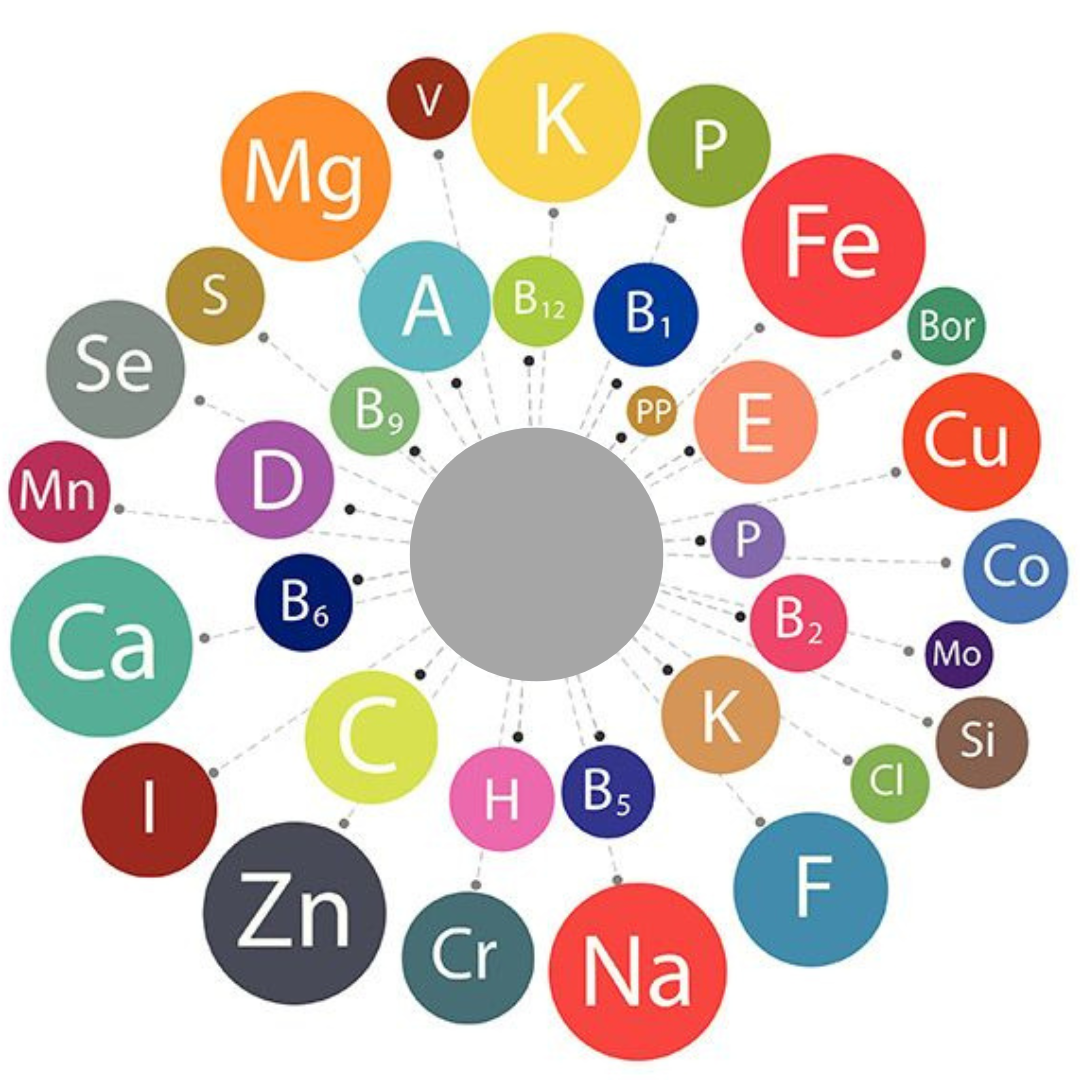
Micronutrients are vitamins and minerals required in very small amounts, yet they govern almost every essential process in the human body. Unlike carbohydrates, proteins, and fats, which provide energy and structure, micronutrients act as regulators.
They decide whether food can be converted into energy.
They determine how nutrients are absorbed and transported.
They guide growth, immunity, brain development, hormone balance, and emotional regulation.
If macronutrients are the fuel, micronutrients are the operating system.
Without them, food remains food.
With them, food becomes nourishment, stability, and resilience.
This is why a child can eat enough and still struggle, not just physically, but emotionally and mentally as well.
Most evenings, somewhere between homework and bedtime, a familiar question appears.
“Why do I have to eat this?”
It is rarely asked with curiosity. More often, it comes wrapped in fatigue, negotiation, or quiet resistance. And in that moment, answers about vitamins or “because it’s healthy” rarely land.
What does land is something simpler.
Inside the body, there is a busy little city that never sleeps. Every day, it runs schools, builds roads, repairs walls, fights off invaders, and powers new ideas. And like any city, it relies on a team of workers.
Iron is the delivery truck that carries oxygen to every corner, so legs can run and brains can think clearly.
Calcium is the builder stacking strong bones and sturdy teeth, brick by brick.
Vitamin D holds the keys that let calcium enter the building sites.
Vitamin A keeps the lights on, helping eyes see clearly and immune cells spot trouble early.
Zinc stands guard at the city gates, helping the body fight germs before they cause chaos.
B vitamins run the classrooms, helping the brain learn, remember, and process emotions.
Magnesium keeps the power grid stable, calming muscles, nerves, and emotional responses when the day gets long.
Iodine ensures the city’s control centre, the thyroid, keeps growth, metabolism, and mood regulation running smoothly.
Chromium manages sugar traffic so energy and emotions do not spike and crash together.
Selenium and manganese quietly repair daily wear and tear, protecting brain cells from oxidative stress.
When these workers are well-fed, the city runs smoothly.
When some are missing, the city still functions, but everything feels harder, slower, noisier, and more overwhelming.
This is how food stops being about finishing a plate and starts being about helping the body and mind do their job.
Also read - Why Some Children Refuse Food and How Early Palate Development Can Change the Story
Children’s emotions are not separate from their biology.
The brain is a nutrient-hungry organ. Neurotransmitters that regulate mood, focus, sleep, and emotional balance are built using vitamins and minerals.
When micronutrients are insufficient, the nervous system struggles to self-regulate.
Iron deficiency has been linked to poor attention, irritability, and reduced cognitive performance.
Magnesium plays a role in calming the nervous system and supporting stress resilience.
B vitamins are essential for neurotransmitter production and emotional processing.
Zinc supports emotional regulation and has been associated with mood stability.
Iodine is critical for thyroid hormones, which directly influence energy levels, mood, and mental clarity.
This is why emotional symptoms often appear before physical ones.
A child may seem anxious before they seem tired.
Overwhelmed before they fall sick.
Reactive before growth falters.
According to the National Institutes of Health, multiple micronutrients are directly involved in brain function, mood regulation, and cognitive development.
Source, NIH, Vitamins and Minerals
Once parents begin to see micronutrients as the quiet “city workers” keeping their child’s body and mind running smoothly, food decisions tend to shift naturally. The question becomes less about what will they eat today and more about what will quietly support their body over time.
This is where clean-label, thoughtfully prepared foods play a practical role. Blends that combine grains, pulses, nuts, seeds, and vegetables in digestible formats help deliver iron, zinc, magnesium, B-vitamins, calcium, and trace minerals consistently, without overwhelming a child’s system. These are the kinds of foods designed to support oxygen delivery, bone building, immune defence, emotional regulation, and steady energy, the very “city worker” roles discussed above. Parents looking to bridge everyday nutrient gaps can explore Juniors Nutrition’s clean, traditionally prepared mixes and snacks as supportive tools, not replacements for home food, but reliable allies when consistency matters most.
Micronutrients are delicate by nature. Their effectiveness depends not just on what is eaten, but on how well the body can absorb and use it. Highly processed ingredients, artificial colours, preservatives, and synthetic additives can place additional stress on digestion and, in some cases, interfere with the absorption of these nutrients.
Clean-label foods, made without unnecessary additives and prepared using methods like soaking, roasting, and gentle cooking, respect the body’s natural absorption pathways. When digestion is calm and supported, micronutrients are more likely to reach the cells where they are needed most. This is why ingredient quality and preparation matter as much as nutrient counts, and why clean labels are not a trend, but a biological necessity when nourishing growing bodies and minds.
Children are not maintaining bodies. They are building them.
Brains are wiring. Nervous systems are learning how to self-soothe. Emotional circuits are forming. Hormones are preparing for future transitions. Every one of these processes depends on micronutrients.
The World Health Organization identifies micronutrient deficiencies as one of the leading contributors to impaired growth, weakened immunity, and cognitive delays in children worldwide.
Source, WHO, Micronutrient Deficiencies
What makes micronutrient gaps difficult to detect is that they rarely show up dramatically. They appear quietly.
Frequent infections.
Poor stamina.
Low appetite.
Difficulty concentrating.
Emotional volatility.
Uneven growth patterns.
A child can look “fine” and still be under-nourished at a cellular and emotional level.
Around six months, iron stores from birth begin to decline. The gut lining is still delicate. The brain and nervous system are developing rapidly.
Iron, zinc, iodine, vitamin A, calcium, magnesium, and B vitamins support brain wiring, emotional regulation, immune defence, and early sensory processing.
Early food exposure shapes how the nervous system learns to tolerate, process, and trust food.
Growth accelerates while emotional expression intensifies. Appetite becomes inconsistent. Independence rises.
Micronutrients support speech development, emotional regulation, sleep patterns, and immune resilience. Magnesium, iron, zinc, iodine, and B vitamins are particularly important during this emotionally volatile stage.
Cognitive demand increases. Social exposure grows. Emotional self-control is still developing.
Iron, iodine, zinc, vitamin D, calcium, magnesium, and B vitamins support attention, memory, stress tolerance, and behavioural regulation.
Bones lengthen. Hormonal shifts begin quietly. Emotional sensitivity often increases.
Iron, calcium, magnesium, zinc, phosphorus, selenium, manganese, and iodine support growth spurts, mood balance, and stress resilience.
Teenagers experience intense hormonal, emotional, and cognitive demand.
Iron, zinc, calcium, magnesium, iodine, and B vitamins support mood stability, energy levels, sleep quality, and academic performance.
Deficiencies may appear as fatigue, anxiety, low motivation, mood swings, or poor focus.
Micronutrient deficiencies accumulate slowly.
UNICEF reports that deficiencies in iron, iodine, vitamin A, zinc, and other trace minerals remain among the most significant barriers to optimal child development globally.
Source, UNICEF, Improving Child Nutrition
Over time, gaps may contribute to anaemia, weak bone density, frequent illness, vision issues, learning difficulties, emotional dysregulation, and delayed development.
This is not about fear. It is about foresight.
| Micronutrient | Primary Role | Natural Food Sources |
|---|---|---|
| Iron | Oxygen transport, brain function | Millets, pulses, leafy greens |
| Calcium | Bone and teeth formation | Dairy, ragi, sesame |
| Vitamin D | Calcium absorption, immunity | Sunlight, fortified foods |
| Vitamin A | Vision, immune health | Carrots, pumpkin, greens |
| Zinc | Immunity, emotional regulation | Seeds, nuts, pulses |
| Iodine | Thyroid, mood, metabolism | Iodised salt, dairy |
| Magnesium | Nervous system calming | Nuts, seeds, grains |
| Phosphorus | Bone strength, energy | Grains, dairy |
| Selenium | Brain cell protection | Nuts, seeds |
| Chromium | Blood sugar balance | Whole grains |
| Manganese | Metabolism, bone health | Nuts, grains |
| Copper | Iron utilisation | Seeds, nuts |
| Folate | Cell division | Pulses, greens |
| Vitamin B12 | Nerve function | Dairy, animal foods |
| Vitamin C | Iron absorption | Citrus, amla |
| Vitamin E | Cellular protection | Seeds, nuts |
| Potassium | Muscle and nerve function | Fruits, vegetables |
| Molybdenum | Enzyme activity | Pulses, grains |
Not a perfect day. A realistic one.
| Time | Meal | Micronutrient Contribution |
|---|---|---|
| Morning | Millet-based breakfast with nuts or seeds, fruit | Iron, calcium, magnesium, B vitamins |
| Mid-morning | Fruit, yogurt, or milk | Vitamin C, calcium |
| Lunch | Grain, pulse, vegetable, fat | Iron, zinc, iodine, vitamin A |
| Snack | Nuts, seeds, milk, or fruit | Magnesium, zinc, healthy fats |
| Dinner | Simple, familiar home food | Balanced micronutrient support |
Across the day, micronutrients quietly accumulate, supporting both physical and emotional balance.
Children do not need perfect meals.
They need consistent exposure.
Micronutrients work like savings. Small, regular deposits matter far more than occasional large ones.
When food is clean, thoughtfully prepared, and diverse over time, the body and brain learn how to absorb and use what they need.
If your child eats selectively, repetitively, or unpredictably, you are not failing.
Micronutrients are not about forcing variety.
They are about building nourishment gently, over time.
When parents understand how the body and mind work together, food stops being a battle.
It becomes a relationship.
A foundation for lifelong, generational health.
Tasneem Sangani is the co-founder of Juniors Nutrition and a passionate advocate for building generational health through mindful, clean-label child nutrition. As a certified Reiki Master, she brings deep insight into how emotional regulation, nervous system safety, and mindful eating intersect with digestive confidence and lifelong food habits.
Driven by the mission to nurture a generation that is physically resilient, emotionally grounded, and energetically balanced, Tasneem stands by one promise:
“If it’s not good enough for my own children, it’s not going anywhere near yours.”
Her work bridges ancient nutritional wisdom with contemporary science, helping families feel confident, calm, and competent at every stage of their child’s feeding journey.